Headaches: when are they dangerous and when should you see a neurologist?
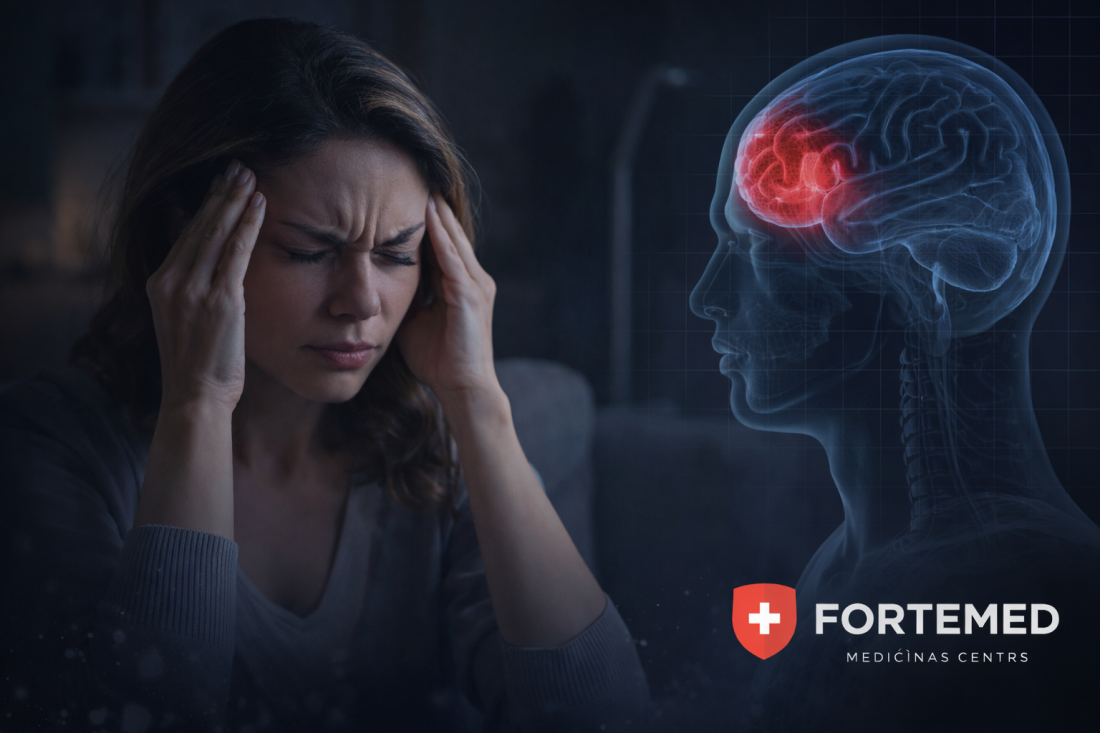
Headaches are one of the most common health complaints experienced by both women and men. They can be occasional and mild, but sometimes headaches signal more serious health problems. This is why it is important to understand when a headache is harmless and when a neurologist’s consultation is necessary.
In this article, we explain the types of headaches, their most common causes and the symptoms that require special attention.
Why do headaches occur?
Headaches can have various causes — from everyday stress to neurological disorders. They are often related to lifestyle, lack of sleep or prolonged computer work.
The most common causes of headaches:
- Stress and tension;
- Lack of sleep;
- Dehydration;
- Prolonged eye strain;
- Hormonal fluctuations.
However, in some cases headaches may be associated with migraine, nervous-system disorders or even serious diseases.
Types of headaches
To understand how serious a headache is, it is important to distinguish between its types.
Tension-type headache
This is the most common type and usually manifests as a pressing sensation on both sides of the head. It often occurs because of stress or fatigue.
Migraine
Migraine is characterised by severe, throbbing pain on one side of the head, often accompanied by nausea and sensitivity to light and sound.
Cluster headache
Less common but very intense pain, usually localised in one area of the face or around one eye.
When can headaches be dangerous?
Most headaches are not dangerous, but some symptoms may indicate a more serious problem.
Pay special attention if:
- A headache appears suddenly and is very severe;
- Headaches become more frequent or intense;
- Visual disturbances or dizziness appear;
- There is numbness or weakness in the body,
- A headache is accompanied by nausea or vomiting.
In such cases, a neurologist’s consultation and additional examinations are necessary.
What happens during a neurologist’s consultation?
A neurologist assesses the symptoms, their frequency and nature, as well as the lifestyle and health history. If necessary, additional examinations may be prescribed, such as:
- Magnetic resonance imaging of the head (MRI);
- Computed tomography (CT);
- Blood tests.
These examinations help determine the cause of the headache accurately.
How can headaches be reduced in everyday life?
In milder cases, headaches can be reduced through lifestyle changes. Regular sleep, sufficient water intake and a work–rest balance have a significant effect on well-being.
It is also important to reduce stress and follow ergonomic principles, especially when working at a computer.
When should you see a neurologist in Riga?
If headaches recur regularly, become more intense or interfere with everyday life, it is recommended to see a specialist. Timely diagnosis helps prevent complications and improve quality of life. At FORTEMED Medical Centre, experienced neurologists are available for consultations to determine the cause of headaches and choose the most appropriate treatment.