High blood pressure: symptoms, risks and treatment
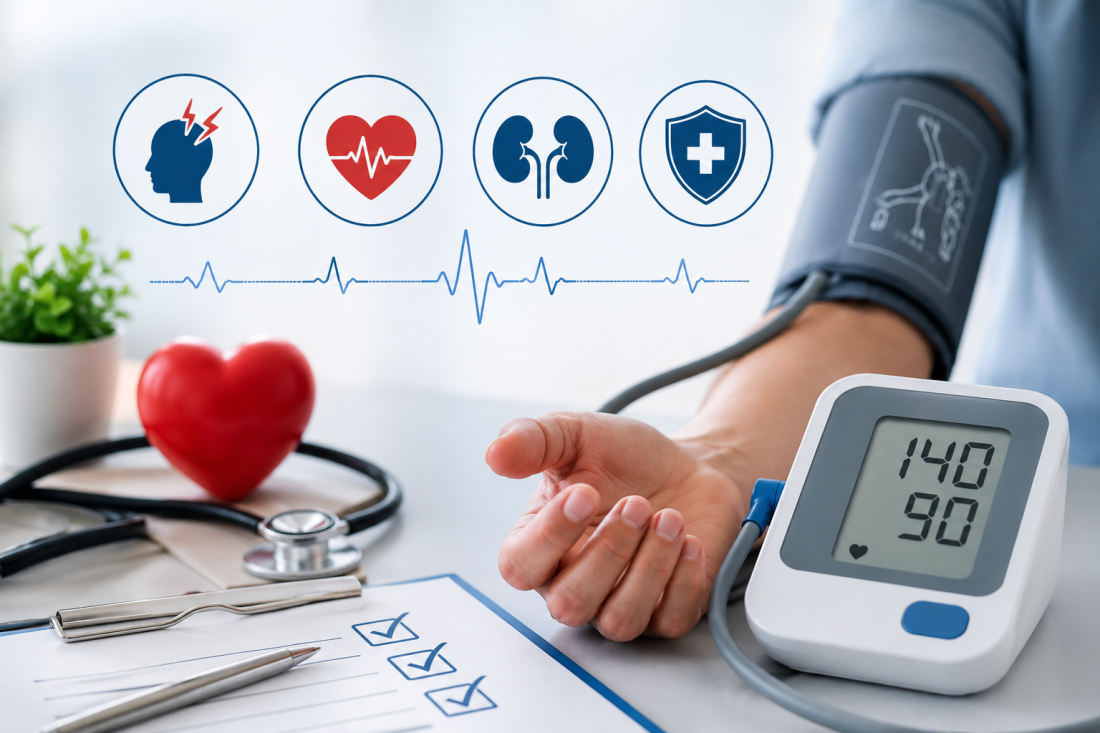
High blood pressure, or hypertension, is one of the most common chronic diseases in the world. It often develops unnoticed and causes no pronounced symptoms for a long time, which is why it is often called the “silent disease”. However, untreated high blood pressure significantly increases the risk of cardiovascular disease.
What is high blood pressure?
Blood pressure is the force with which blood presses against the walls of blood vessels. Blood pressure is considered high when readings remain above the normal range for a long time — usually above 140/90 mmHg.
Blood pressure can fluctuate during the day, but if it remains constantly high, it can damage blood vessels and internal organs.
Symptoms of high blood pressure
One of the greatest risks is that hypertension often occurs without pronounced symptoms. However, in some cases, signs may appear that indicate an increase in blood pressure.
The most common symptoms:
- Headaches;
- Dizziness;
- Ringing in the ears;
- Palpitations;
- Fatigue.
These symptoms are not specific, so the only reliable way to determine blood pressure is to measure it regularly.
Why is high blood pressure dangerous?
Long-term high blood pressure places additional strain on the heart and damages blood vessels. It can cause serious complications that affect quality and length of life.
The main risks:
- Heart disease and heart attack;
- Stroke;
- Kidney damage;
- Deteriorating vision.
The longer blood pressure remains high, the greater the risk of complications.
What contributes to high blood pressure?
The development of hypertension is influenced by several factors, including lifestyle and heredity. Many of them can be changed, so prevention is important.
Risk factors:
- Stress and a sedentary lifestyle;
- Excess weight;
- Unhealthy diet (excess salt);
- Smoking and alcohol;
- Heredity.
Age also increases the risk of hypertension.
How is high blood pressure diagnosed?
The diagnosis is based on regular blood-pressure measurements. The doctor may recommend measuring it for several consecutive days or using 24-hour monitoring.
Additional examinations may be ordered to assess the condition of the cardiovascular system and determine possible causes.
How is high blood pressure treated?
Treatment depends on the blood-pressure level and risk factors. In milder cases, lifestyle changes may be sufficient, while in other cases drug therapy is necessary.
The most important steps:
- A balanced diet and lower salt intake;
- Regular physical activity;
- Normalising body weight;
- Reducing stress.
If lifestyle changes are not enough, the doctor may prescribe medicines to control blood pressure.
How can blood pressure be controlled in everyday life?
Regular blood-pressure monitoring is essential, especially for people at increased risk. Measurements can be taken at a medical institution or at home using a blood-pressure monitor.
It is important to follow the doctor's recommendations and not stop treatment without consultation.
When should you see a doctor?
It is recommended to see a specialist if:
- Blood pressure regularly exceeds the normal range;
- Headaches or dizziness appear;
- There are palpitations or fatigue;
- There is an increased risk (for example, heredity).
Timely diagnosis helps prevent serious complications.
Where to have your blood pressure checked in Riga?
At FORTEMED Medical Centre, cardiology consultations and the necessary examinations are available to assess cardiovascular health. Specialists help establish a diagnosis and develop an individual treatment plan.