Symptoms of thyroid problems in women: when to see an endocrinologist?
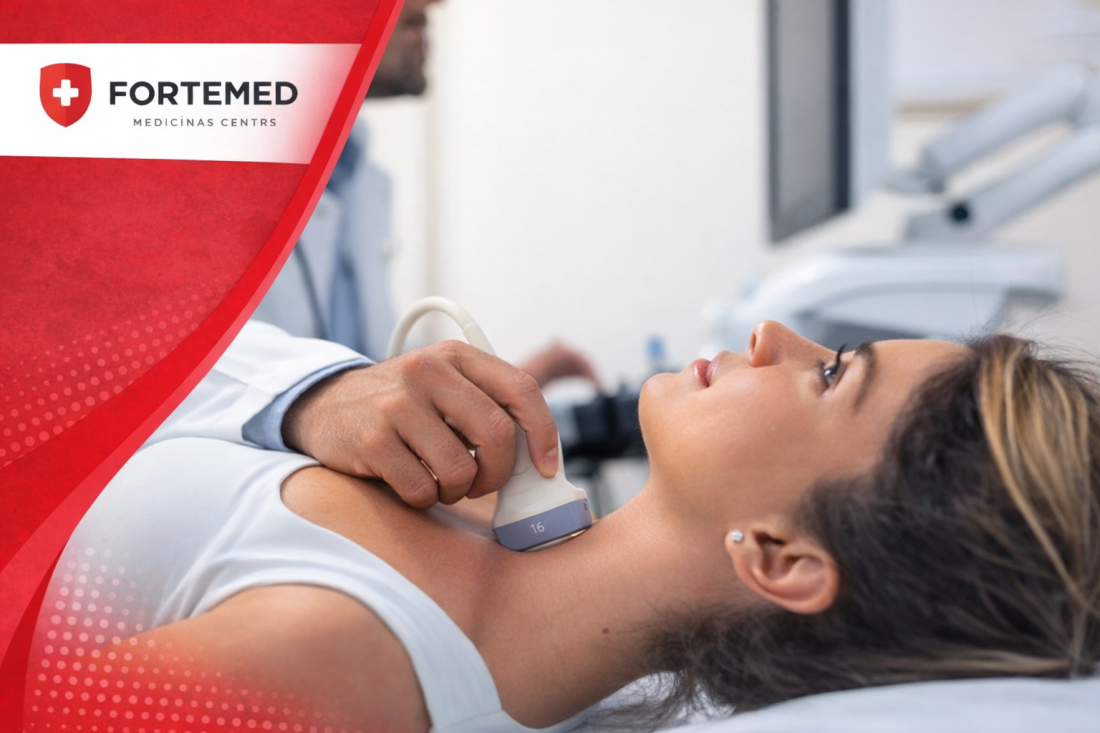
The thyroid is a small but very important organ at the front of the neck that regulates metabolism, energy levels, heart function and hormonal balance. Thyroid disorders are significantly more common in women than in men and can manifest themselves through various, often non-specific symptoms. As a result, thyroid diseases are often detected late, with symptoms attributed to stress, fatigue or lifestyle factors.
In this article, we explain the most common symptoms of thyroid problems in women, when an endocrinologist’s consultation is necessary and how the thyroid is examined.
How the thyroid affects the female body
The thyroid produces the hormones thyroxine (T4) and triiodothyronine (T3), which affect almost all systems of the body — metabolism, heart rhythm, the nervous system, reproductive function, and the condition of the skin and hair. If there are too few or too many hormones, broad changes occur in the body, often developing gradually and initially seeming insignificant.
Because the symptoms are non-specific, women often see an endocrinologist late. Fatigue, weight fluctuations or emotional changes are explained by stress or overwork, although the true cause may be hormonal.
The most common symptoms of thyroid problems in women
One of the most typical symptoms of thyroid dysfunction is persistent fatigue and lack of energy. Women often describe a feeling of having no strength from the morning, reduced ability to concentrate and daytime sleepiness. If fatigue does not go away after rest, the cause may be an imbalance of thyroid hormones.
Unexplained weight changes are also common. In hypothyroidism, metabolism slows down, which can lead to weight gain, swelling and fluid retention. In hyperthyroidism, on the other hand, metabolism speeds up, causing weight loss even when appetite is maintained.
Another important group of symptoms includes changes in the cardiovascular and nervous systems, as thyroid hormones directly affect heart rhythm and emotions. Women may experience palpitations, anxiety, irritability or emotional instability, which are often attributed to stress.
Changes in the menstrual cycle may also indicate thyroid dysfunction, as this organ is closely connected with the reproductive system. Irregular menstruation, pronounced cycle fluctuations or fertility problems may be consequences of hormonal imbalance.
Changes in the skin and hair are another common sign. Increased hair loss, brittle hair and dry skin are more often characteristic of hypothyroidism. These changes usually develop gradually, so at first they are attributed to seasonal or cosmetic factors.
In some cases, local symptoms appear in the neck area — a feeling of pressure, swelling or difficulty swallowing. This may indicate an enlarged thyroid or nodules, and in such a situation an endocrinologist’s consultation and ultrasound examination are necessary.
When you should definitely see an endocrinologist
An endocrinologist’s consultation is recommended if several symptoms appear or persist for a long time. It is especially important to assess thyroid function if there is:
-
Unexplained fatigue or weight changes;
-
Palpitations, anxiety or cycle disorders;
-
Swelling in the neck or a family history of thyroid disease.
Early diagnosis helps prevent symptoms and complications from progressing and allows effective treatment to be started.
How the thyroid is examined
Thyroid diagnostics are usually simple and painless. The endocrinologist assesses the symptoms, examines the neck and orders hormone tests. The main indicator is TSH, which shows the activity of the thyroid, while T3 and T4 specify the hormone levels. If an autoimmune disease is suspected, antibodies are also tested.
An important diagnostic method is thyroid ultrasound, which makes it possible to assess the gland’s size and structure and the presence of nodules.
The most common thyroid diseases in women
Hypothyroidism — reduced thyroid function, causing fatigue, weight gain and sensitivity to cold — is the most common thyroid disorder in women. Another common disorder is hyperthyroidism, when there are too many hormones and palpitations, sweating and weight loss occur.
Women are also relatively often diagnosed with:
-
Hashimoto’s thyroiditis (autoimmune inflammation);
-
Thyroid nodules;
-
Postpartum thyroiditis.
These diseases are usually well controlled if detected in good time.
Thyroid problems at different stages of life
The risk of thyroid disorders increases during periods of hormonal change — after childbirth, during perimenopause and menopause. At these stages, symptoms are often confused with natural hormonal fluctuations, so the pathology may remain undetected. It is especially recommended to have a preventive thyroid examination during these stages of life.
Modern treatment options
Today, most thyroid diseases can be well controlled. Hypothyroidism is treated with hormone replacement therapy, which restores normal metabolism and well-being. In hyperthyroidism, medicines that reduce hormone production are used. Thyroid nodules are usually monitored regularly by ultrasound.
Treatment started in good time makes it possible to live a full life and prevent long-term complications.
Where to have a thyroid examination in Riga
At FORTEMED Medical Centre, you can receive endocrinologist consultations and thyroid ultrasound, as well as have hormone tests prescribed and a treatment plan developed. Experienced specialists help assess symptoms, establish a diagnosis and select the most appropriate therapy.